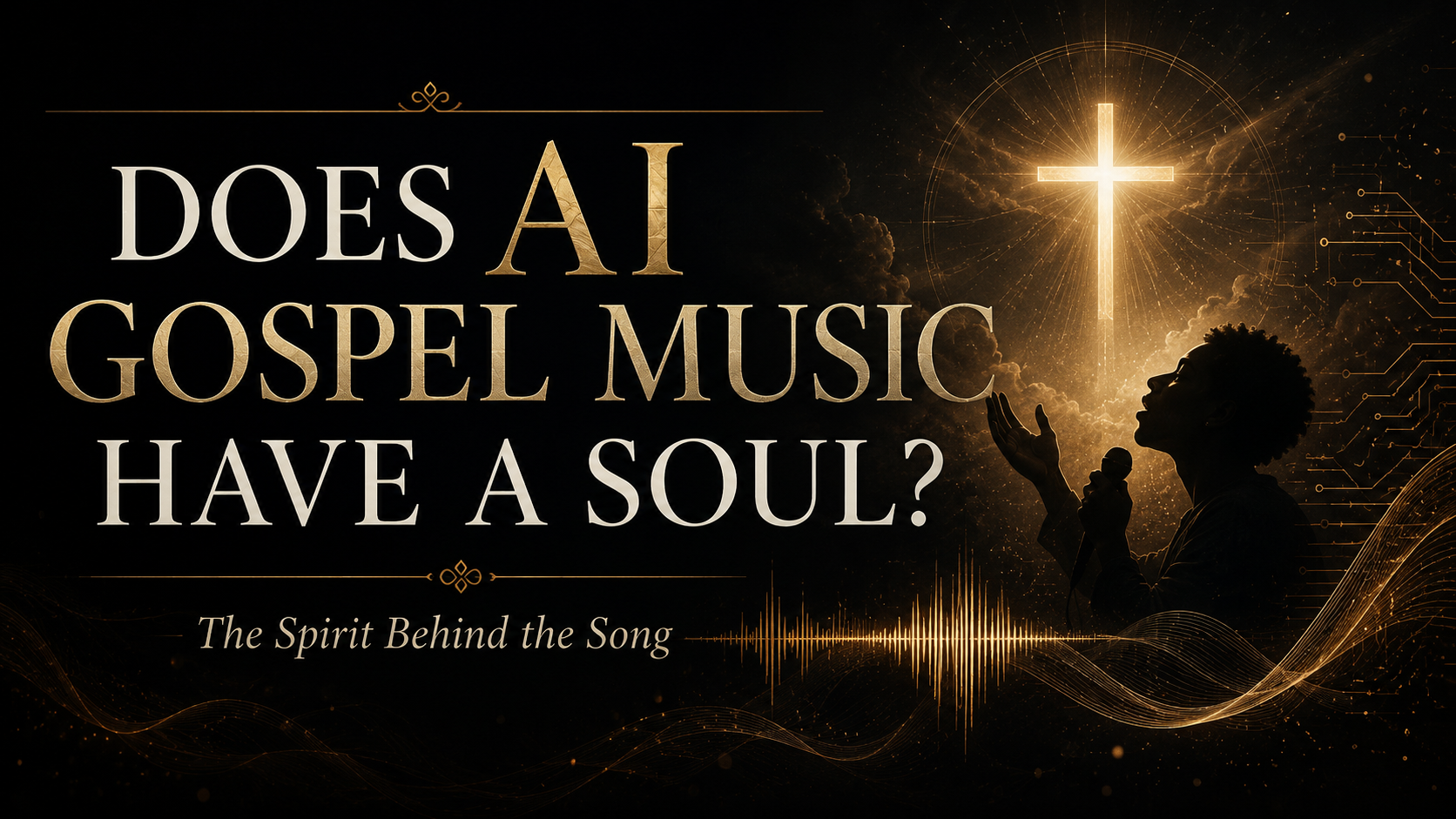
There is a growing conversation around AI gospel music and AI-created worship.
Some believe it is soulless. Some believe it is dangerous. Some see it as a tool. Others are unsure what to think because the conversation touches something deeper than music.
It touches worship, reverence, creativity, truth, and discernment.
This reflection is not written to defend technology or dismiss concern. It is an invitation to think more deeply about the heart behind the sound.
At the center of it all is one question:
Does AI gospel music have a soul?
That question deserves more than a quick yes or no. It deserves wisdom. It deserves honesty. And it deserves a conversation that does not automatically turn into fear, accusation, or careless acceptance.
Because underneath the debate about artificial intelligence is a deeper question:
What are we really discerning when we listen to worship?
AI Does Not Worship
- AI does not worship God.
- AI does not pray.
- AI does not repent.
- AI does not have a testimony.
- AI does not have a relationship with Jesus.
- AI does not surrender, convict, obey, or reverence God.
AI is not a worshiper. It does not know God personally. It does not have a heart posture before the Lord.
So if we are asking whether AI itself has a soul, the answer is no.
But that does not end the conversation.
Because music created with AI does not appear from nowhere. There is still a human being behind the prompting, writing, selecting, shaping, editing, publishing, and presenting of that song.
And that is where discernment becomes important.
The Tool Is Not the Whole Story
Throughout history, people have used tools to create music.
- A piano is a tool.
- A microphone is a tool.
- A recording studio is a tool.
- Auto-tune is a tool.
- A laptop is a tool.
- A digital audio workstation is a tool.
Now, AI has become another tool.
The tool matters, but the tool is not the whole story.
The deeper question is:
What is the heart behind the use of the tool?
- Is the person creating the song trying to honor God?
- Is the message biblically sound?
- Is the song pointing people toward truth?
- Is the motive worship, or is it only attention?
- Is the creator being honest about the process?
- Is the fruit drawing people closer to God or simply entertaining them?
That is where discernment comes in.
A Song Can Sound Spiritual and Still Need Discernment
One reason this conversation matters is because gospel music has always carried weight.
People do not just listen to gospel music the same way they listen to background noise. Gospel music has the power to comfort, convict, encourage, strengthen, and remind people of who God is.
But we have to be honest: a song can sound spiritual and still need discernment.
A beautiful voice does not automatically mean anointing.
A moving chord progression does not automatically mean truth.
A popular song does not automatically mean purity.
A powerful performance does not automatically mean spiritual alignment.
This applies to music made by humans and music made with AI.
Sometimes we are quick to question the tool, but slow to question the fruit. We can reject AI music because it feels unfamiliar, while overlooking human-created music that sounds holy but may not be rooted in truth, humility, or reverence.
That does not mean we become suspicious of everything. It means we mature in discernment.
The Human Heart Still Matters
If AI does not have a soul, then the responsibility sits even more heavily on the person using it.
The human heart behind the song matters.
If a creator uses AI to produce gospel music carelessly, without reverence, without biblical understanding, and without concern for the message, that should concern us.
But if a believer uses AI as a creative tool to express worship, write from a place of faith, and point people back to God, then the conversation becomes more layered.
The machine is not worshiping.
But the person guiding the song may be.
The machine is not praying.
But the writer may be.
The machine is not surrendering.
But the creator may be creating from a surrendered place.
This does not mean every AI gospel song is automatically acceptable. It means we need discernment before we make broad statements.
Worship Must Remain Sacred
Even if we use modern tools, worship must remain sacred.
That is my concern with this conversation.
- Not that AI exists.
- Not that people are experimenting with technology.
- Not that creators are finding new ways to produce music.
My concern is that worship must not become casual.
- If someone is creating gospel music with AI simply because it is trendy, profitable, or easy, that should be questioned.
- If someone is using the name of Jesus to build a catalog but has no reverence for the message, that should be questioned.
- If someone is flooding platforms with worship songs but has no concern for truth, doctrine, or spiritual responsibility, that should be questioned.
But again, this is not only an AI issue. This is a worship issue.
So, Does AI Gospel Music Have a Soul?
AI itself does not have a soul.
But the conversation around AI gospel music does.
- It reveals what we believe about worship.
- It reveals what we value in gospel music.
- It reveals how we discern sound, spirit, message, and motive.
- It reveals whether we are more moved by performance than truth.
- It reveals whether we are willing to ask hard questions without becoming hateful, fearful, or careless.
- The goal is not to worship technology.
- The goal is not to defend every AI-created song.
- The goal is not to condemn every person exploring new creative tools.
- The goal is to remain faithful, discerning, reverent, and honest.
Because in the end, worship is not just about how a song was made.
It is about who the song points to.
It is about the truth it carries.
It is about the heart behind it.
And most of all, it is about whether God is being honored.
Final Reflection
Maybe the better question is not simply:
Does AI gospel music have a soul?
Maybe the better question is:
What is the spirit behind the song?
Before calling something worship, we should discern the message, the motive, the fruit, and the heart behind it.
- Not with pride.
- Not with fear.
- Not with careless acceptance.
- Not with instant rejection.
But with wisdom, humility, discernment, and reverence for the God we say we worship.
Reflection Question:
Before calling something worship, what do you believe we should discern first — the tool, the message, the motive, the fruit, or the heart behind it?